
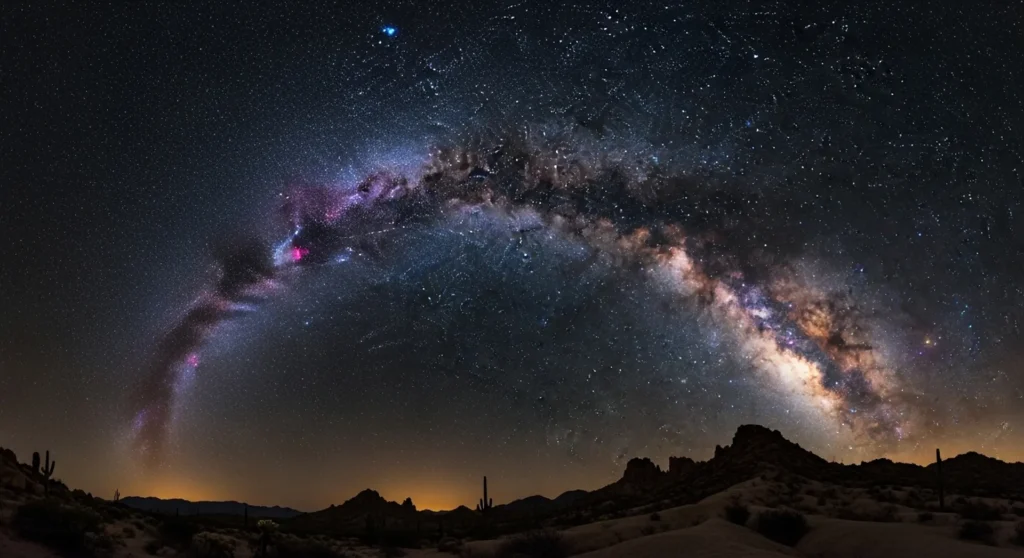
What Are California’s Dark Sky Parks?
California may be famous for its sunny beaches and bustling cities, but the Golden State also harbors some of the darkest skies in America. Far from the glow of Los Angeles or San Francisco, certified dark sky parks offer visitors a rare opportunity to witness the cosmos in breathtaking clarity. These protected areas have earned official recognition from DarkSky International for their commitment to preserving natural darkness and minimizing light pollution.
Whether you want to see the Milky Way stretch across the heavens, catch a meteor shower, or simply reconnect with the universe above, California’s dark sky parks provide the perfect backdrop for unforgettable celestial viewing experiences.
Death Valley National Park: America’s Largest Dark Sky Park
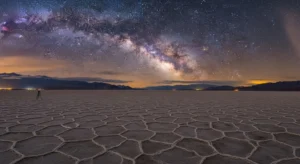
Death Valley National Park holds the distinction of being the largest International Dark Sky Park in the United States, spanning an impressive 3.4 million acres of protected wilderness. Located far enough from major cities in the Southwest, the park offers night skies that are near pristine — in many places providing views close to what our ancestors witnessed before the rise of electric lights.
The National Park Service has earned Death Valley a Gold Tier designation from DarkSky International — the highest level awarded for star-filled skies. Astronomical objects visible here are available only in some of the darkest locations around the globe.
Best Stargazing Locations in Death Valley
Mesquite Flat Sand Dunes near Stovepipe Wells provides easy access and a peaceful atmosphere for stargazing. For an otherworldly experience, Badwater Basin — the lowest point in North America at 282 feet below sea level — offers some of the park’s darkest conditions. The salt flats shimmer under starlight, creating an almost surreal viewing environment.
Ubehebe Crater in the park’s northern section attracts fewer visitors, making it ideal for peaceful stargazing sessions. For those willing to climb higher, Dante’s View at over 5,000 feet elevation offers cooler temperatures and remarkably clear air for premium celestial observation. The best time to visit is from October through April when temperatures become comfortable for nighttime viewing.
Joshua Tree National Park: Desert Skies Close to Los Angeles
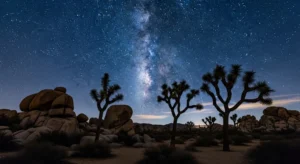
For the millions of residents in the greater Los Angeles area, Joshua Tree National Park represents the nearest convenient destination for stargazing under relatively dark skies. This unique park straddles two desert ecosystems — the higher Mojave Desert and lower Colorado Desert — creating a distinctive landscape that feels even more magical under a canopy of stars.
Joshua Tree earned its International Dark Sky Park designation in 2017, recognizing both its exceptional night sky quality and ongoing efforts to protect it.
Designated Stargazing Areas in Joshua Tree
The National Park Service has established four designated stargazing areas within Joshua Tree: the parking lots at Quail Springs, Hidden Valley, Cap Rock, and Ryan Mountain. Each location offers restroom facilities and relatively flat terrain suitable for setting up telescopes or simply spreading out a blanket.
For the darkest skies within the park, venture to Pinto Basin in the eastern section. If you plan to explore Joshua Tree as part of a larger California road trip, consider timing your visit to arrive before sunset so you can scout your viewing location during daylight hours.
Anza-Borrego Desert State Park: Southern California’s Dark Sky Oasis
Anza-Borrego Desert State Park protects nearly 650,000 acres of desert ecosystem, making it California’s largest state park. Located just two hours from San Diego and three hours from Los Angeles, this vast wilderness serves as an accessible refuge for stargazers throughout Southern California.
The park completely surrounds the village of Borrego Springs, which became California’s first International Dark Sky Community in 2009. With no stoplights, low development, and community-supported lighting standards, the village maintains conditions that allow residents and visitors alike to enjoy stellar views every clear night. If you enjoy discovering hidden gems throughout California, Borrego Springs deserves a spot on your list.
Essential Stargazing Tips for California’s Dark Sky Parks
Whether you are a seasoned astronomer or a curious first-timer, proper preparation significantly enhances your stargazing experience. California’s desert parks present unique conditions that require thoughtful planning.
Timing Your Visit for Optimal Viewing
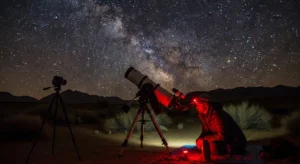
Moon phase represents the single most important factor in planning a stargazing trip. New moon periods provide the darkest skies, revealing thousands more stars than visible during full moon phases. Check lunar calendars before booking your trip and aim for dates within a few days of the new moon.
Give your eyes at least 20 to 30 minutes to adjust to darkness before expecting optimal vision. Even brief exposure to bright lights — including phone screens — resets this process, so bring a red-filtered flashlight for any illumination needs.
What to Bring for a Night Under the Stars
Desert temperatures drop dramatically after sunset, often falling 30 to 40 degrees from daytime highs. Layered clothing including a warm jacket, hat, and gloves ensures comfort during extended observation sessions. A comfortable reclining chair or blanket allows you to watch the sky without straining your neck.
For equipment, beginners need surprisingly little. Standard 10×50 binoculars reveal star clusters, nebulae, and lunar details invisible to the naked eye. Smartphone apps like Stellarium or Star Walk help identify constellations, planets, and satellites in real time. Download these apps before arriving, as cellular service remains limited in most dark sky locations.
Celestial Events Worth Planning Around
Beyond everyday stargazing, California’s dark sky parks offer front-row seats to spectacular celestial events throughout the year. The Perseid meteor shower in mid-August consistently delivers one of the year’s best shows, producing up to 100 meteors per hour under optimal conditions. The Geminid shower in December offers similarly spectacular displays with bright, multicolored meteors.
Planet watching provides rewarding observations throughout the year. Jupiter and Saturn appear as brilliant points easily visible to the naked eye, while basic binoculars reveal Jupiter’s moons and Saturn’s rings. When you explore California’s stunning national parks, combining daytime adventures with nighttime stargazing creates the richest possible experience of these remarkable landscapes.
California’s dark sky parks remind us that natural darkness itself has become a precious and increasingly rare resource. These protected areas preserve not only exceptional viewing conditions but also the profound human experience of standing beneath a star-filled sky and contemplating our place in the universe.